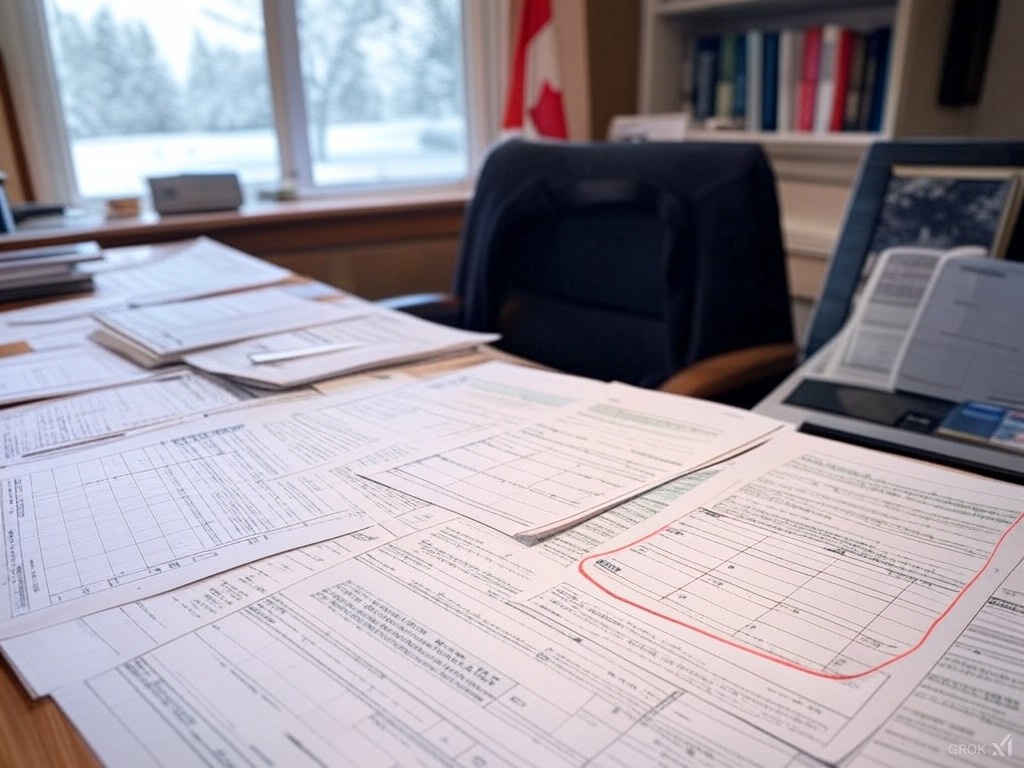
Tax Season in Canada: A Comprehensive Analysis of Policy, Process, and Economic Implications
In Canada, tax season is viewed as an important moment not just for individual taxpayers and businesses, but also for policymakers and the economy at large. This article looks at the tax season mostly as an analysis of the structure of the tax system, compliance issues, policy intentions, and political-economic implications. With various theories of finance and quotes from the Canada Revenue Agency (CRA) and the Department of Finance Canada, it highlights the challenges and possibilities that tax season creates. The tax season discussion acknowledges the policy reforms, electronic advancements that have taken place in tax filing, and the broader economic growth context. Suggestions for reforms of the Canadian tax system are made.
Introduction
Once more a year, as the deadline for filing income tax returns approaches, Canada ascends into what is referred to as the “tax season.” This period is characterized by a large wave of economic activity connected with tax filing and a heightened focus on compliance to garner government revenues. Tax season is much more than a mere proceeding of administrative routine; it forms the backbone of creating fiscal policies and provides economic behavior cues (Canada Revenue Agency [CRA], 2023). This article provides a deeply analytical glimpse at the Canadian tax season, touching on a comparison of the tax system, a description of return filling, compliance issues, policy implications, and the economic impact of taxes.
The article endeavors to craft an evidence-based discussion using established financial theories, government data, and contemporary research. In the present analysis, the discussion shall be contained within the following framework: overview of the Canadian tax system, detailed theoretics and practicalities of a tax season, economic and policy ramifications of the enforcement of tax; finally, suggestions for improvement shall be made.
Overview of the Canadian Tax System
Structure and Administration
Canada’s tax system is known for its complexity and comprehensiveness. At its core, the system is administered by the Canada Revenue Agency (CRA), which is responsible for the collection of taxes and enforcement of tax laws (CRA, 2023). The system is structured around several key components:
- Federal and Provincial/Territorial Taxes:
Canada operates a dual tax system, meaning that taxes are levied by both the federal government and the provincial/territorial governments. While the federal government collects income taxes, provinces and territories impose their own rates on income as well as sales taxes (Government of Canada, 2023). - Personal Income Tax:
Personal income tax is one of the primary sources of government revenue. The system is progressive, with higher earners paying a higher percentage of their income in taxes. Tax brackets and rates are adjusted annually to reflect changes in the economy and inflation (Canadian Centre for Policy Alternatives, 2022). - Corporate Tax:
Canadian corporations are subject to both federal and provincial corporate income taxes. The federal corporate tax rate is relatively moderate compared to some other OECD countries, and various deductions and credits are available to encourage investment (OECD, 2021). - Other Taxes:
In addition to income taxes, Canada imposes several other types of taxes, including the Goods and Services Tax (GST)/Harmonized Sales Tax (HST), payroll taxes, property taxes, and excise duties. These contribute significantly to overall government revenue.
Legal Framework and Policy Objectives
The legal basis for taxation in Canada is provided by the Income Tax Act, along with various provincial statutes. The primary policy objectives of the Canadian tax system include revenue generation, wealth redistribution, and the promotion of economic efficiency (Fullerton & Metcalf, 2017). Tax policies are also used as tools to achieve social objectives such as environmental protection and support for small businesses through targeted credits and deductions.
The Dynamics of Tax Season
Timing and Deadlines
Tax season in Canada typically culminates on April 30th for most individuals, though self-employed persons have until June 15th to file their returns. Despite the extended filing deadline for self-employed individuals, any taxes owed must still be paid by April 30th to avoid interest charges (CRA, 2023). The timing of the tax season is designed to allow individuals and businesses to prepare their financial records and ensure compliance with current regulations.
Preparation and Filing Process
The filing process has evolved significantly over the past decade, largely due to advances in technology. Modern electronic filing (e-filing) systems have replaced traditional paper filing methods for many taxpayers, resulting in faster processing times, fewer errors, and improved convenience (Department of Finance Canada, 2022). Key aspects of the filing process include:
- Data Gathering and Record-Keeping:
Taxpayers are required to compile detailed records of income, deductions, credits, and expenses throughout the fiscal year. Maintaining accurate records is essential for both compliance and efficient filing. - E-Filing Systems and Software:
The CRA provides various online tools and partners with certified software providers to facilitate e-filing. These platforms are designed to guide taxpayers through the process, help them claim eligible deductions, and calculate their tax liabilities accurately (CRA, 2023). - Audit and Compliance:
The CRA periodically conducts audits to ensure that taxpayers comply with tax laws. During tax season, a heightened focus is placed on verifying the accuracy of returns. Failure to comply can result in penalties, interest charges, and, in severe cases, legal action (Canadian Tax Foundation, 2020).
Challenges During Tax Season
Despite technological advances, tax season in Canada is not without its challenges. These challenges include:
- Complexity of the Tax Code:
The intricacies of the Income Tax Act and provincial tax regulations can create confusion among taxpayers, particularly those with complex financial situations such as self-employed individuals or business owners (Fullerton & Metcalf, 2017). - Compliance Burden:
The burden of compliance, including record-keeping, calculating deductions, and understanding eligibility for various credits, can be onerous for individuals and small businesses. This complexity sometimes necessitates the use of professional tax advisors, adding to the overall cost of compliance (CRA, 2023). - Timely Filing and Payment Issues:
The pressure of meeting strict deadlines can lead to errors or delays in filing. Late submissions result in penalties and interest, which further exacerbate financial burdens for taxpayers (Canadian Centre for Policy Alternatives, 2022).
Economic Implications of Tax Season
Revenue Generation and Public Spending
Tax season is the period during which the government collects a significant portion of its annual revenue. This revenue is vital for funding public services, including healthcare, education, and infrastructure. According to recent estimates, personal and corporate income taxes account for over 60% of total government revenues in Canada (Government of Canada, 2023). The timing of revenue collection also influences fiscal planning and the implementation of public spending programs.
Economic Behavior and Taxpayer Compliance
The structure and timing of the tax season can affect taxpayer behavior in several ways. For instance, the progressive nature of the personal income tax system may encourage taxpayers to engage in income-smoothing strategies to minimize tax liability. Additionally, the availability of deductions and credits may incentivize certain investments or expenditures, influencing consumption patterns and savings behavior (Fullerton & Metcalf, 2017).
Furthermore, the compliance burden associated with the tax season can have a broader economic impact. High compliance costs reduce disposable income and may discourage entrepreneurial activities. Studies have shown that streamlining tax filing processes—primarily through e-filing—can improve compliance rates and reduce administrative burdens, thereby positively impacting economic efficiency (Department of Finance Canada, 2022).
Impact on Business Investment and Productivity
During tax season, businesses evaluate their financial performance and make crucial decisions about investment and expansion. Tax policies, such as accelerated depreciation or investment tax credits, are often used to stimulate business investment. However, the uncertainty associated with frequent changes in tax legislation can lead to delays in investment decisions. Research indicates that a stable and predictable tax environment is correlated with higher levels of business investment and productivity (OECD, 2021).
Macroeconomic Considerations
At the macroeconomic level, the timing of tax revenue collection can influence monetary and fiscal policy decisions. A concentrated influx of tax revenue during tax season affects government cash flow and can have implications for budgetary planning. In addition, the interplay between tax policy and the overall economic cycle is crucial. During economic downturns, for example, tax revenues may decline sharply, necessitating counter-cyclical fiscal measures to stabilize the economy (Canadian Tax Foundation, 2020).
Policy Reforms and Future Outlook
Recent Reforms in Canadian Tax Policy
In recent years, the Canadian government has introduced several reforms aimed at modernizing the tax system, reducing compliance costs, and ensuring fairness in taxation. Notable reforms include:
- Digital Transformation Initiatives:
The CRA has invested heavily in digital technologies to improve the efficiency and accuracy of tax collection. This includes enhancements to e-filing systems, real-time processing of tax returns, and the integration of data analytics to identify non-compliance (CRA, 2023). - Tax Incentives for Innovation:
To encourage research and development, Canada has expanded tax credits for innovative businesses. These measures are designed to boost productivity and ensure that Canadian companies remain competitive in a global market (Department of Finance Canada, 2022). - Simplification of Tax Regulations:
Efforts have been made to simplify the tax code, particularly for small businesses and individuals. Simplification measures include the consolidation of various tax credits and the reduction of paperwork requirements, which aim to lower the compliance burden (Canadian Centre for Policy Alternatives, 2022).
Challenges Ahead
Despite these reforms, challenges remain. The complexity of the tax system, particularly in areas such as international taxation and the taxation of digital economies, continues to pose difficulties for policymakers. In addition, demographic changes such as an aging population will likely necessitate adjustments in tax policy to ensure long-term fiscal sustainability (Fullerton & Metcalf, 2017).
Future Directions
Looking ahead, several strategies may further enhance the effectiveness of the Canadian tax system:
- Increased Integration of Artificial Intelligence:
The adoption of artificial intelligence (AI) and machine learning technologies in tax administration could lead to more efficient processing, improved fraud detection, and personalized taxpayer services (Department of Finance Canada, 2022). - Enhanced International Cooperation:
As global trade and digital commerce expand, international cooperation on tax matters will become increasingly important. Canada may need to work more closely with international organizations such as the Organisation for Economic Co-operation and Development (OECD) to address issues like tax avoidance and ensure that multinational corporations pay their fair share (OECD, 2021). - Policy Stability and Predictability:
To foster business investment and economic growth, policymakers should strive to maintain a stable and predictable tax environment. This may involve long-term tax planning and clearer communication of future tax policies to reduce uncertainty among businesses and investors (Canadian Tax Foundation, 2020).
Conclusion
Tax season, in Canada, is quite multifaceted and largely intertwines with decisions made by individuals and the economy at large. The duality between federal and provincial arms, the tariff- and income-based approach, as well as other taxes independent of those levels provide some guidance as to what will determine policies of finance and public spending. Thus, essential revenues are collected, diffusing into public spending on services during tax season, while taxpayers and businesses wade through a labyrinthine compliance environment.
This paper has, to this end, analyzed the economic implications of the tax season, such as revenue generation, tax and investment behavior of taxpayers and firms, and macroeconomic stability. Despite all the advances in technology that should have simplified several aspects of the tax-filing process, the system complexity and corresponding burden on compliance are overwhelming.
Taxations reforms delivered through digital transformation considering possibly reducing taxes to stimulate innovation have since improved efficiency across the board; nonetheless, there remains a call for more to be done about seamlessly integrating advanced technologies, cooperatively sitting with fellow countries, and most importantly creating policy stability in realizing a direction in line with a new tax system.
In summary, the tax season is a crucial one for the Canadian economy. It assures effective collection of public revenues while also driving economic behavior and business investment. This means significant gains toward a lowered administrative burden, improved compliance, and settled policies aimed at furthering stable economic growth and fiscal sustainability.
References
Canadian Centre for Policy Alternatives. (2022). Taxation and Income Distribution in Canada. Retrieved from https://www.policyalternatives.ca/
Canadian Tax Foundation. (2020). The Canadian Tax System: An Overview and Policy Considerations. Retrieved from https://www.ctf.ca/
Canada Revenue Agency (CRA). (2023). Filing Your Income Tax Return. Retrieved from https://www.canada.ca/en/revenue-agency.html
Department of Finance Canada. (2022). Modernizing the Canadian Tax System: Digital Transformation Initiatives. Retrieved from https://www.fin.gc.ca/
Fullerton, D., & Metcalf, G. (2017). Tax Policy in Canada: The Role of the Tax System in Promoting Economic Growth. Canadian Journal of Economics, 50(3), 789–812.
Organisation for Economic Co-operation and Development (OECD). (2021). Revenue Statistics 2021: Taxation in Canada. Retrieved from https://www.oecd.org/tax/
Government of Canada. (2023). Tax Policy and Administration. Retrieved from https://www.canada.ca/en/department-finance.html
This comprehensive analysis has provided insight into the Canadian tax season from multiple perspectives—legal, operational, economic, and policy. By examining the current challenges and proposing future directions, it contributes to the understanding of how tax policy can influence economic behavior and public finance in a dynamic global environment.